20 kinds of classic climbing roses. Just plant one and your balcony will be beautiful!
Most Plants

▲ Click on the picture above to enter the "Plant Enjoyment " applet platform experience
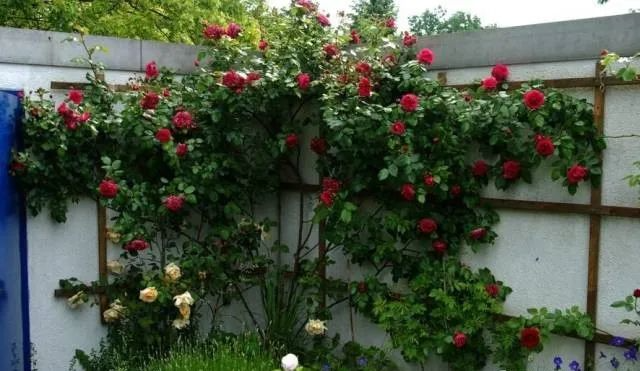
Climbing roses are brightly colored, large and fragrant, have a long flowering period, and come in many varieties and colors, including red, pink, yellow, white, orange, purple, border colors, primary colors, double colors on the surface and back, etc. They are very rich, and the flower shapes include cup-shaped, ball-shaped, disc-shaped, high-core, etc. They can climb on various well-ventilated racks and corridors to form flower balls, flower columns, and flower walls. They are very beautiful and are the first choice of many flower lovers. Today I will introduce dozens of classic climbing rose varieties to you, I hope you like them.
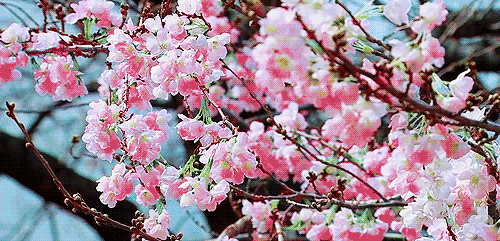

Fujimoto Tsuki
Climbing Roses (CL series for short ) grow like vines, clinging to other objects or crawling on the ground. They bloom multiple times or just once. The flowers are single, double, or triple, with rich and varied colors. The flower diameter is 2.5 to 8 cm. Some have fragrance, while others do not.
There are many ways to classify climbing roses. According to their growth characteristics, they can be divided into upright types and climbing types. According to their flowering habits, they can be divided into two categories: seasonal flowering and frequent flowering.
One-season flowering series: It was bred in the early 19th century by hybridizing roses, perfume roses, hybrid Changchun roses and hybrid perfume roses.
Frequent flowering series:
Climbing hybrid tea roses: including a small number of climbing hybrid spring roses, this series is a bud mutation of the corresponding hybrid tea roses and hybrid Changchun roses. Famous climbing varieties include: "Teng Heping", a bud mutation of "Heping"; "Teng Mohong" is a bud mutation of "Mohong", "Teng Shiquanshimei" is a bud mutation of "Shiquanshimei", "Teng Caiyun" is a bud mutation of "Caiyun", "Huaxia" is a bud mutation of "Samantha", and "Kun Teng" is a bud mutation of "Kunteli".
Climbing Feng (multi) rose: Famous varieties of this series include "Climbing Warrior", "Angela", "Flower Fairy", "Joy", "Wolong", "Wonderland", "Red Wolong", etc.
Climbing rose (large flower): derived from the bud mutation of large flower rose. "Climbing Queen Elizabeth", "Western Land", "Dortmund", "Orange Flame" and so on.
Large-flowered climbing roses: hybridized Changchun roses and hybrid tea roses or hybridized Guangye roses and hybrid tea roses, belonging to the newer series. Varieties belonging to this series include "Guangpu", "Dushutai", "Dazhuan", "Lanyueliang", "German Venus", "Entertainment Field", "Baihe", etc.
Cold-resistant climbing rose: a hybrid of Rosa glossyleaf and American cold-resistant rose. The famous variety is "Cycola" ("Seven Sisters of Large Flowers"), and other cold-resistant varieties include "Mozart", "Royal Carriage", "Chang'e Flying to the Moon", "Summer Camp", etc.
Climbing miniature roses: derived from bud mutations of miniature roses. Varieties belonging to this series include "Stream", "Climbing Rainbow", "Climbing Plum Lang Dina", "Galaxy", "Golden Sunshine", "Climbing Ruby", "Climbing Purple Era", "Climbing Grass Hula Dancer", "Sweet Dream" and so on.
Lonza Gemstone
Chinese name: Longsha gemstone
Latin name: Pierre de Ronsard
Also known as: Rose Eden 85/Rose Eden 88
Registered name: Meiviolin
Breeder: Meilland
Released: 1987 (France)
In the early 1880s, the world-renowned rose company "Meyon International" of France cultivated a very unique rose with elegant colors and classical flower shape, but it was almost abandoned because it did not conform to the aesthetic trend of the time. In 1985, the company's agent in Germany seized the opportunity to first launch it to the market and achieved great success. This variety is also widely known and loved by everyone because it won the title of "world's favorite rose" at the World Rose Conference in Osaka, Japan in 2006. In order to commemorate the French rose poet "Pierre de Ronsard", the variety was named after him, and it is the "Ronsard Gem" we are familiar with today.
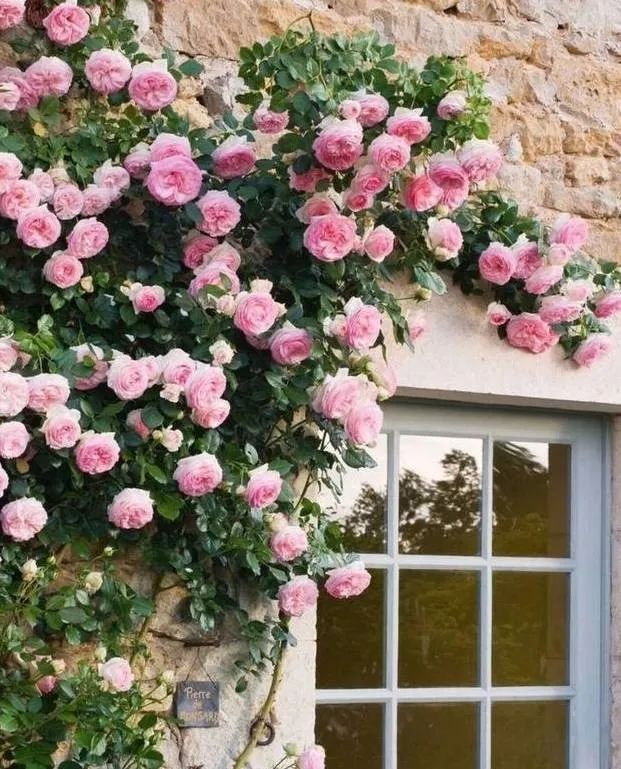
The flower diameter is 8-10 cm, the number of petals is more than 80, purple-red or dark red, cup-shaped, the flower surface is flat, and there is a slight fragrance when the temperature is high. Flowering period: from the end of March to December in the southern subtropical areas, from May to October in the north, a single flower lasts for 5-7 days, and it has a multi-season flowering habit, with significantly fewer flowers in summer and winter.
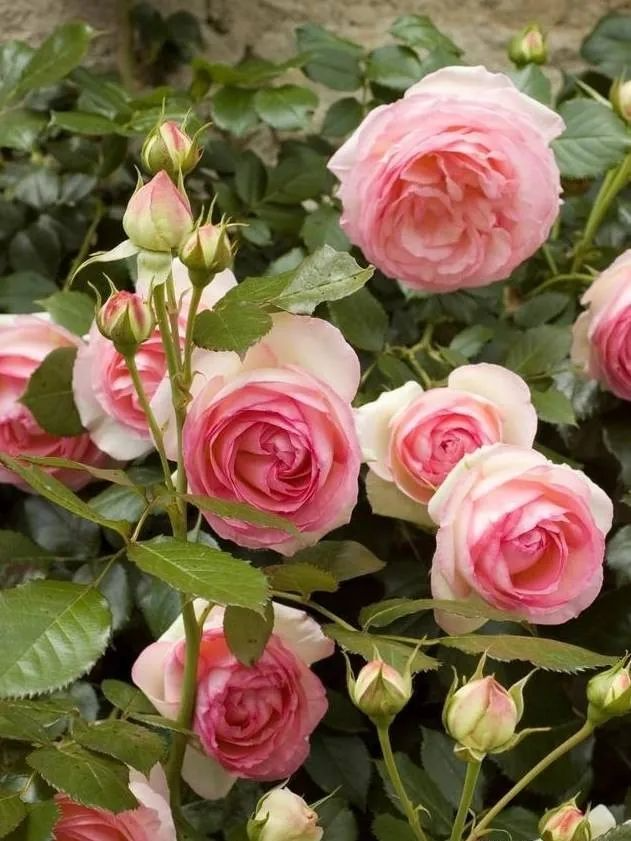
You never get tired of looking at the Lonza gemstone, especially the faint red under the pink surface, which is simply the most addictive!
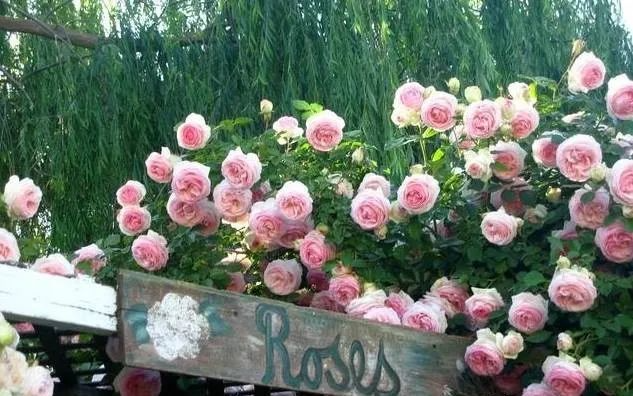
Bai Jiaren
Bajazzo-(Germany, dark pink, vine, 2011)
Cultivated: 2011, Germany, W. Kordes & Sons
2011 W. Kordes' Söhne (Retail) launched in Germany under the name 'Bajazzo'.
Category: Fujimoto Climbing
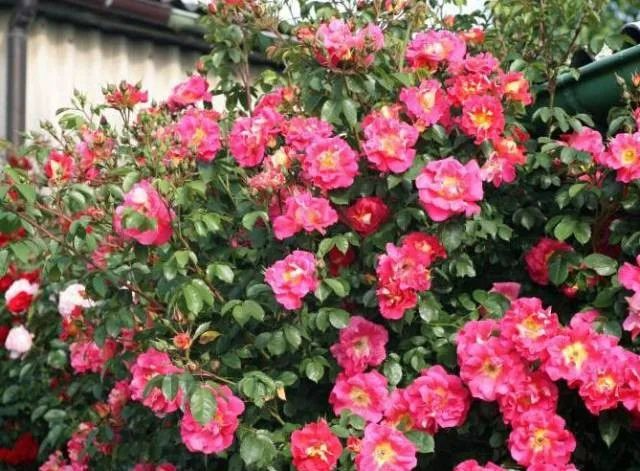
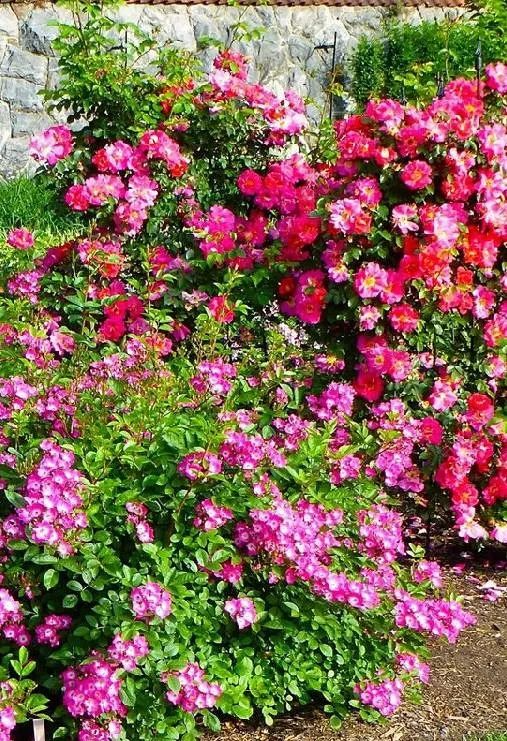
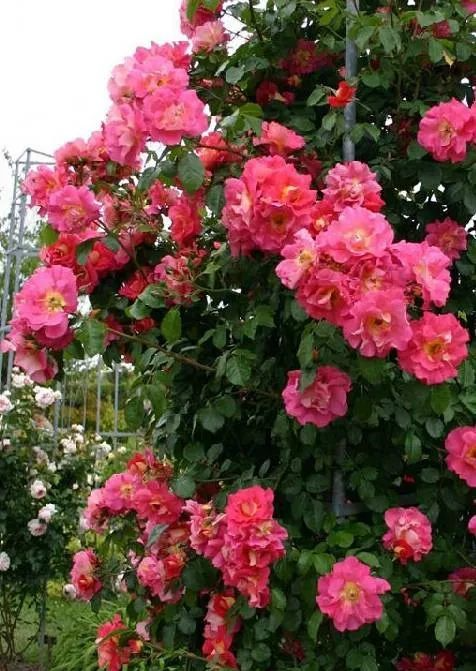
Deep pink with silver reverse and yellow stamens fading to light pink. Mildly perfumed. Medium-large, semi-double (9-16 petals) bloom form. Repeat blooms throughout the season.
The branches are climbing and loose. The leaves are large, shiny, dark green.
Height up to 220 cm.
Can be grown as a shrub.
Parentage: Unknown.
This variety won several international awards in 2011.
In 1961, there was a variety with the same name, "Bajazzo" - (Germany, HT red blend, 1961)
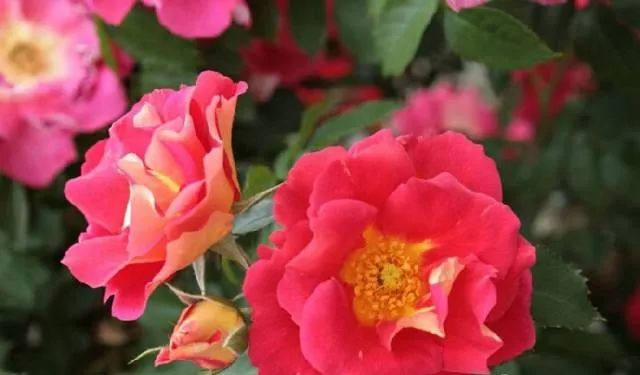
A New Dawn
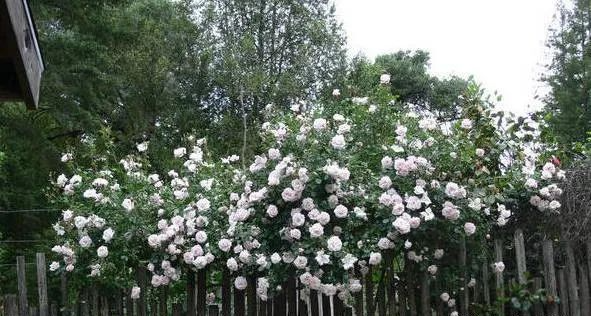
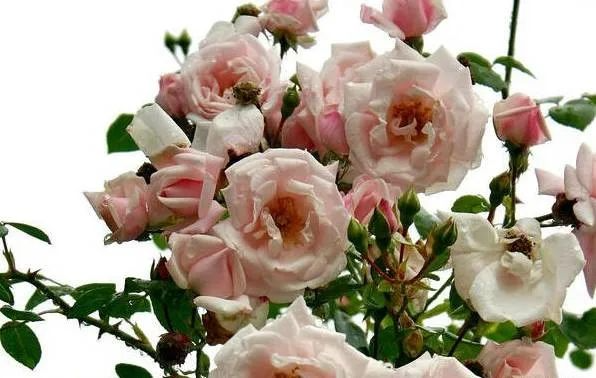
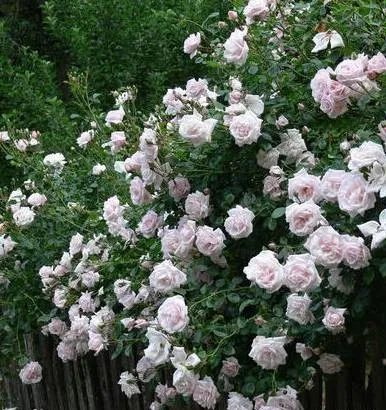
New Dawn——(USA, vine, pink, 1930) Also called Pink Cloud
The New Dawn
Light pink, large climbing flowers
Registered name: New Dawn
Discovered: Somerset Rose Nursery, USA, 1930
Introduced in the United States in 1930 by Henry A. Dreer under the name 'New Dawn'.
Category: Climber, Hybrid Wichurana, Large-Flowered Climber.`
Light pink. Mild perfume. Petals 35. Average diameter 10 cm. Medium-sized, double (26-40 petals), mostly solitary, clustered, small, flat. Repeated bloom for many seasons.
The branches are arching and climbing. The leaves are medium, shiny, and dark green.
Height 305 to 610 cm, width 245 cm.
Hardiness: USDA 9B-5B. Can be used for cut flowers, gardens or pillars. Hardy. Very aggressive. Shade tolerant. Disease Susceptibility: Very disease resistant.
Princess Margaret
Crown Princess Margareta
Cultivated: David Austin, UK, 2000.
Category: English Rose [Austin], Shrub EnglishRose [David Austin], Shrub.
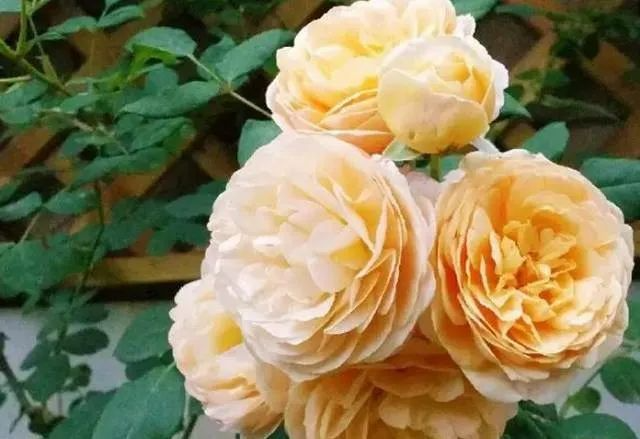
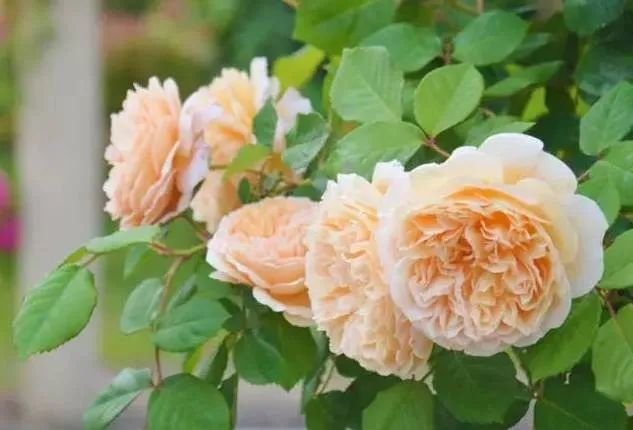
Apricot or apricot blend. Strong fruity, tea rose aroma. Average diameter 10 cm. Medium to large, (41 petals). Pointed, ovate buds. Repeated blooming for many seasons.
Habit: Medium, dense, climbing. Height 120 to 185 cm, width 120 cm.
For climbing, cut flowers, garden, pillars or shrubs
Parent-child: Seedling × Abraham Darby
Origin of the name: Crown Princess Margareta of Sweden was the granddaughter of Queen Victoria and an excellent garden expert. She and the Crown Prince (later King Gustavus VI Adolfus of Sweden) created the famous Swedish summer villa Sofiero Castle in Helsingborg. Princess Margaret married the Crown Prince on June 15, 1905, and died on May 1, 1920. Gustavus VI had reached retirement age (68 years old) when he ascended the throne on October 29, 1950, but he lived a long life and still served as king for 22 years until his death in 1973. So although Princess Margaret gave birth to many children for the king, she did not really become the Queen of Sweden until her death, but was only posthumously named.
Laguna
Laguna——(Germany)
Commercial alias: KORadigel
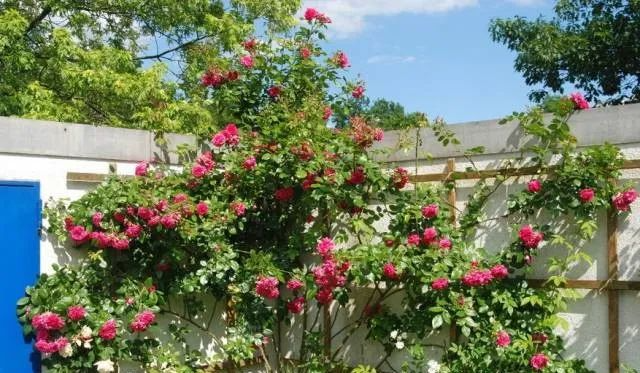
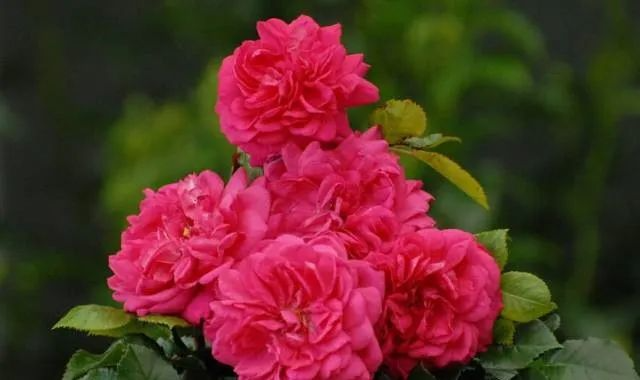
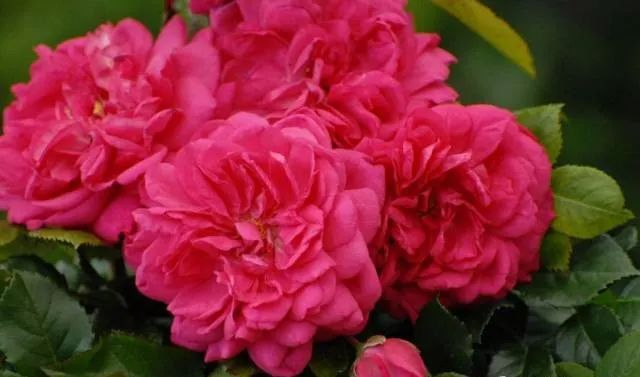
Deep pink, large climbing flowers.
Registered name: KORadigel
Exhibition name: Laguna
Cultivated: 1995, Germany, Tim Hermann Kordes.
Launched in Germany in 2004 by W. Kordes' Söhne (Retail).
Category: Climber, Large-Flowered Climber.
Deep pink. Strong fruity, spicy aroma. Petals 45 to 55. Average diameter 7 cm. Medium, very full (41 petals), clustered, small clusters, cupped opening form. Oval buds. Repeat bloom for many seasons.
Branches are climbing and upright. Leaves are medium, glossy, dark green, dense. 7 leaves
Height 250 cm, width 100 cm.
Hardiness: USDA zones 9b to 5B.
Used for climbing vines, cut flowers, gardens or columns.
Disease Susceptibility: Very resistant to black spot. Very resistant to mildew.
Seeds: La Sevillana ® × Sympathie
more detail:
20 kinds of classic climbing roses. Just plant one and your balcony will be beautiful! - SO2X


Comments
Post a Comment