Key points of basic knowledge on urban landscaping maintenance
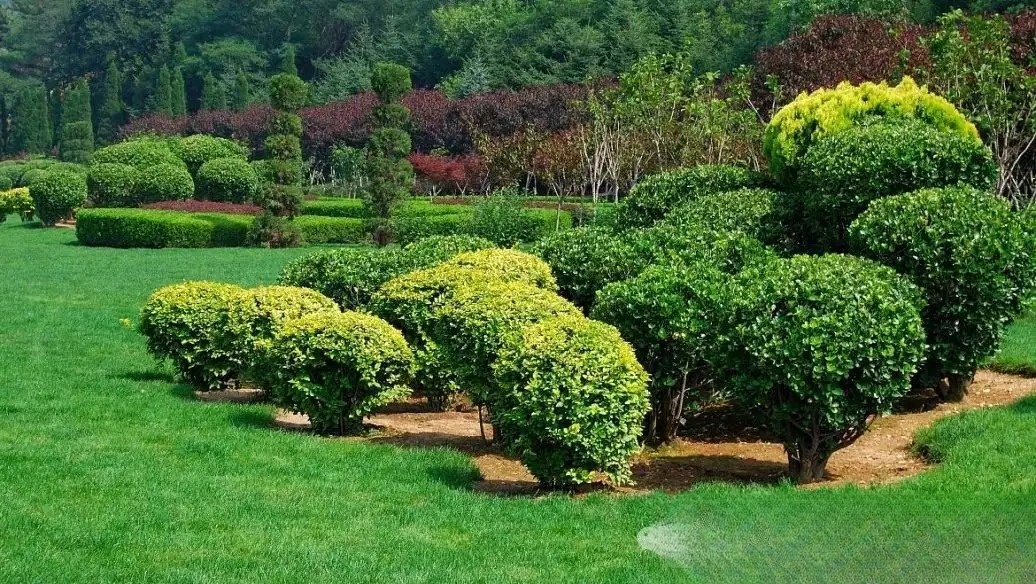
1. Basic requirements for maintenance management: a. The selected materials must be of reliable quality, have normal procurement channels, comply with relevant national standards, and meet construction requirements. b. The entire maintenance must comply with the relevant national garden and greening specifications and standards and meet the standards. c. Accept Party A's assessment and management of the quality of greening maintenance, and promptly and unconditionally rectify any problems that arise to ensure that the standards are met; d. Ensure that the entire maintenance complies with the relevant national garden and greening specifications and standards and meets the maintenance quality technical grade standards.
1. Lawn maintenance methods and technical measures
2. Lawn pests and diseases and their prevention and control: Except for a few birds and beasts, the vast majority of animals that harm lawns are harmful insects, followed by mites.
3. Basic ways of pest control: a. Control the biological community, that is, reduce the types and number of pests, and increase the types and number of beneficial organisms (natural enemies of pests). b. Control the number of major pest populations. Specific measures: eliminate or reduce the insect source; worsen the environmental conditions for pests to cause harm; take appropriate measures in time to suppress pests before they cause harm in large numbers.
4. Causes of lawn diseases: (pathogens, susceptible hosts, environmental conditions, etc.). a. Pathogens: refers to the dominant factor that plays a direct role in the occurrence of diseases. According to their nature, they can be divided into two categories: biological factors and non-biological factors. Diseases caused by biological factors are called infectious diseases, including fungi, bacteria, viruses, phytoplasmas and nematodes; diseases caused by non-biological factors are called non-infectious diseases, also known as physiological diseases, which include various physical and chemical factors. Physical factors include changes in temperature, humidity, and light; chemical factors include nutritional imbalance (macro and trace elements), air pollution, chemical poisoning, etc. b. Susceptible hosts: The existence of susceptible hosts is another important factor in the occurrence and development of lawn diseases. As a living organism, lawn grass must also have a resistance reaction to diseases. This interaction between pathogens and hosts determines whether the disease occurs and the extent of the disease. c. Environmental conditions: The occurrence of lawn diseases is also restricted by environmental conditions (including non-biological factors and biological factors). On the one hand, environmental conditions affect pathogens, promoting or inhibiting their development; on the other hand, they also affect the growth and development of the host, affecting its susceptibility and resistance to disease. Therefore, diseases can only occur and develop when environmental conditions are favorable to pathogens but unfavorable to hosts; conversely, when environmental conditions are favorable to hosts but unfavorable to pathogens, diseases will not occur or will be inhibited.
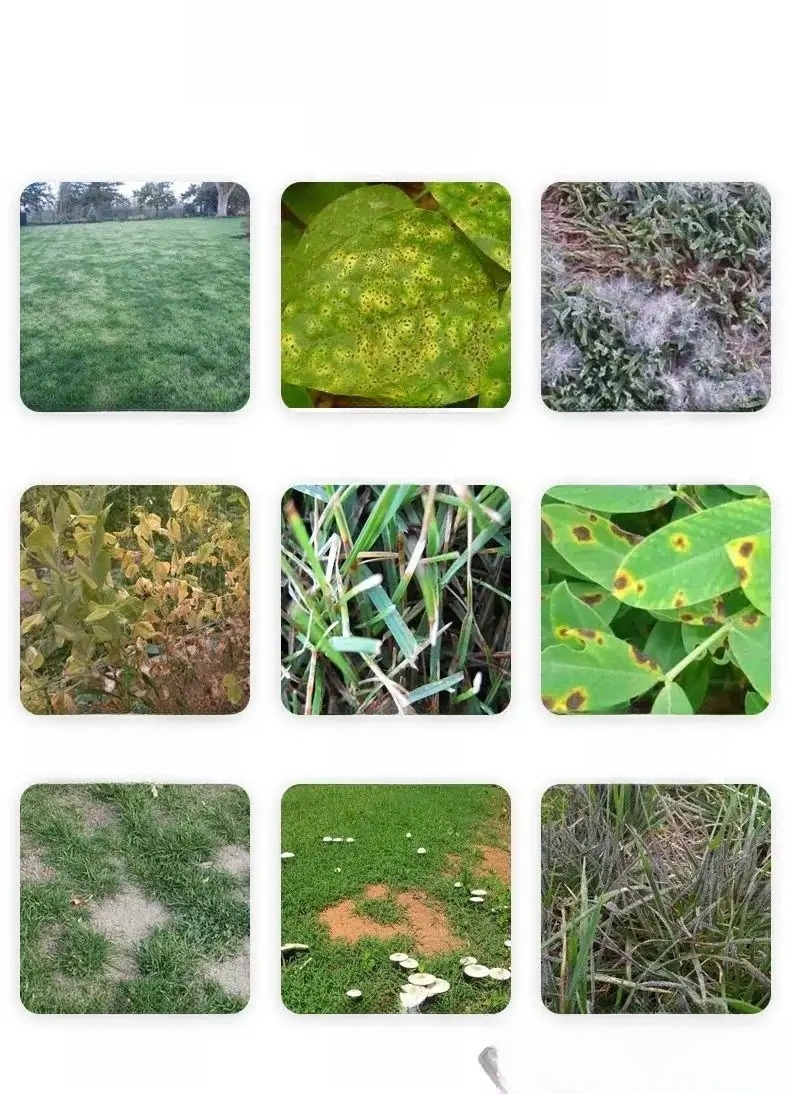
5. Main symptoms of lawn diseases: (1) Discoloration: When a lawn grass loses its normal color partially or completely after it becomes sick, it is called discoloration. Discoloration is mainly caused by the inhibition or destruction of chlorophyll or chloroplasts, resulting in an imbalance in the pigment ratio. One form is that the entire plant or leaf changes color, which is mainly manifested as yellowing. Another form is that the leaf changes color unevenly, and the leaf changes to a mixed color of yellow or green, which is called mosaic or mottle. Examples include yellow dwarf disease of lawn grasses such as bermudagrass, fescue, ryegrass, and bluegrass, and mosaic disease of lawn grasses such as bentgrass, fescue, ryegrass, and bluegrass. (2) Necrosis: The death of diseased cells and tissues of lawn grasses. Necrosis is often manifested as necrotic spots and leaf blight on leaves. Spots are the most common necrotic symptom of leaf diseases. The shape, size, and color of necrotic spots vary depending on the disease, but the outlines are relatively clear. Examples include net spot and ring spot of bermudagrass; copper spot and red spot of bentgrass. (3 ) Decay: refers to the decomposition and destruction of plant tissues over a large area. It is caused by the hydrolytic enzymes produced by pathogens that decompose and destroy plant tissues. Examples include bud rot, root rot, rhizome rot, and snow rot of overwintering grasses in areas with long-term snow cover in winter. (4) Wilting: refers to the phenomenon in which the branches and leaves of the entire plant or part of the plant droop due to dehydration. It is mainly caused by damage to the plant roots, difficulty in water absorption and transportation, or poisoning by pathogenic toxins and induced duct blockage. Examples include bacterial wilt of creeping bentgrass in Toronto. (5) Deformity: refers to the occurrence of lesions that promote or inhibit cell division and growth in the affected parts of the plant, resulting in abnormal morphology of the entire plant or part of the plant. Deformity is mainly caused by pathogens secreting hormone substances or interfering with the host hormone metabolism. Examples include yellow dwarf disease of grasses such as Bermuda grass, Fescue, Rye grass, and Poa annua.
more detail:
Key points of basic knowledge on urban landscaping maintenance - SO2X


Comments
Post a Comment